
Sermorelin Guide: What It Is and How It Works | BIOELITE
Quick answer: Sermorelin is a synthetic peptide analog of GHRH, a hypothalamic signaling peptide. The article notes that evidence for the wellness and anti-aging uses people ask about is limited, and that whether it is appropriate is a decision for a Licensed Provider.
Last updated: October 17, 2026. Reviewed by the BIOELITE clinical team.
In recent years, peptides like Sermorelin have gained attention for their potential to enhance wellness and address aging-related concerns. But what exactly is Sermorelin, and what does the evidence say about it? This guide covers the uses, reported benefits, and considerations of this peptide.
What is Sermorelin?
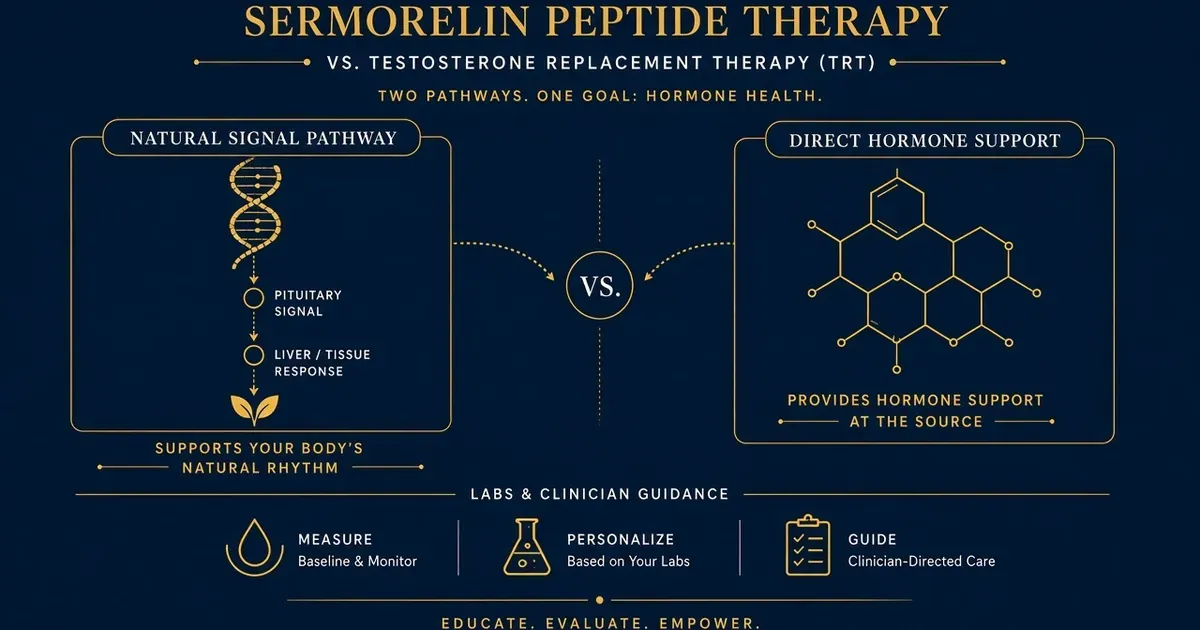
Sermorelin is a synthetic peptide analog of GHRH, a hypothalamic signaling peptide. It comprises the first 29 amino acids of GHRH, making it bioidentical to the active portion of the naturally occurring hormone. It acts on the pituitary gland. Unlike direct hormone supplementation, which introduces external hormones, Sermorelin acts on a signaling pathway.
For FDA’s plain-language explanation of compounded drugs, see the FDA questions and answers on compounding.
How Does Sermorelin Work?
Sermorelin interacts with specific receptors on the pituitary gland, and works differently from direct hormone therapy.
Individual responses to Sermorelin vary.
A Licensed Provider can explain how this signaling pathway differs from direct hormone replacement, which labs are usually reviewed first, and what the current evidence does and does not show.
Benefits of Sermorelin
1. Anti-Aging Support
Anti-aging is one of the most common reasons people ask about Sermorelin, though evidence for anti-aging effects is limited. Aging is associated with changes such as reduced muscle mass, increased body fat, decreased energy, and slower healing. People interested in Sermorelin often mention goals such as:
Improved skin elasticity
Reduced wrinkles
Increased energy and vitality
Enhanced quality of sleep
2. Improved Recovery and Healing
Some people report faster recovery from workouts, injuries, or surgeries, but evidence is limited. A Licensed Provider can explain what is and is not known.
3. Strengthened Immune System
Some people ask whether Sermorelin affects immune function. Evidence is limited, and a Licensed Provider can explain what is known.
4. Better Cognitive Function
Some people ask whether Sermorelin affects focus, memory, and cognitive function; discuss any such goals with a licensed clinician.
Sermorelin vs. Direct Hormone Therapy: What’s the Difference?
Many people wonder how Sermorelin differs from direct hormone therapy. The two work differently.
Sermorelin is a GHRH analog that acts on the pituitary gland.
Direct hormone therapy involves direct administration of a synthetic hormone, which requires careful clinical management.
Sermorelin and direct hormone therapy have different risks and monitoring needs, and evidence on long-term use is limited. A Licensed Provider can explain the differences.
Potential Side Effects of Sermorelin
Sermorelin can have side effects, including:
Mild injection site reactions
Headaches
Nausea
Flushing or warmth
Some people report these effects as mild. It’s essential to work with a healthcare professional to monitor your progress and adjust your dosage as needed.
Who Can Benefit from Sermorelin?
Some adults experiencing symptoms such as fatigue, muscle loss, weight gain, or poor recovery ask about Sermorelin, as do some athletes and individuals interested in anti-aging. Whether it is appropriate is a decision for a Licensed Provider.
That said, Sermorelin is not a one-size-fits-all treatment. Always consult a licensed healthcare provider to determine if it’s right for you.
How to Use Sermorelin
Sermorelin is administered via subcutaneous injections, typically prescribed for daily or nightly use. Typical steps include:
1. Consult a professional: Get a personalized dosage plan based on your needs.
2. Time your injections: Administer Sermorelin before bed as directed by your clinician.
3. Maintain consistency: Follow your prescribed regimen as directed.
Final Thoughts
Some people are interested in Sermorelin for wellness, aging-related concerns, and physical performance, though evidence is limited. Whether it is appropriate for you is a decision to make with a licensed clinician.
If you are considering sermorelin, talk with a Licensed Provider about whether it is appropriate for you. A Licensed Provider can explain what is and is not known about sermorelin. You can read more on the BIOELITE peptide therapy page.
Read how approval status and compounding rules apply to peptides in our Boynton Beach peptide therapy guide.
Ready to talk with a provider? New patients can book at our online booking page, and existing clients can use our existing-client booking page.
Browse more in our Peptide Therapy Guides or see all health guides.
Frequently asked questions about sermorelin
What is sermorelin?
Sermorelin is a synthetic peptide analog of GHRH, a hypothalamic signaling peptide. It comprises the first 29 amino acids of GHRH.
How does sermorelin work?
It interacts with specific receptors on the pituitary gland, and the article says it works differently from direct hormone therapy.
How strong is the evidence for the uses people ask about?
The article says evidence is limited for the anti-aging, recovery, and immune-function questions people raise. A Licensed Provider can explain what is and is not known.
Can sermorelin have side effects?
Yes. The article states that sermorelin can have side effects and lists them, and says that whether it is appropriate is a decision to make with a licensed clinician.