
How TRT Works: From Labs to Monitoring | BIOELITE
Quick answer: Testosterone therapy is intended to help restore testosterone levels toward an appropriate clinical range when low levels are confirmed by lab testing and symptoms are present. The right treatment is not one-size-fits-all, and some people need direct replacement while others may be better candidates for protocols that stimulate the body's own production.
Last updated: October 17, 2026. Reviewed by the BIOELITE clinical team.
Low testosterone rarely shows up as just one problem. It usually looks more like a slow decline you can feel across your whole life - lower energy, reduced drive, weaker workouts, stubborn body fat, poorer recovery, and a sex drive that is not where it used to be. If you have been wondering how testosterone replacement therapy works, the short answer is this: it restores or supports testosterone levels. Testosterone therapy is intended to help restore testosterone levels toward an appropriate clinical range when low levels are confirmed by lab testing and symptoms are present. .
That sounds simple, but the right treatment is not one-size-fits-all. Some people need direct testosterone replacement. Others may be better candidates for protocols that stimulate the body’s own testosterone production. The difference matters because the best outcome is not just higher numbers on a lab report. It is better energy, stronger performance, improved libido, better mood, and a treatment plan that fits your goals and physiology.
How testosterone replacement therapy works in the body
Testosterone is a core hormone involved in muscle mass, red blood cell production, libido, mood, motivation, bone density, and overall metabolic function. In men, it is primarily produced in the testes under signals from the brain. When that signaling system is working properly, the brain releases hormones that tell the testes to make testosterone.
For background on how FDA describes approved testosterone products, see the FDA testosterone information page.
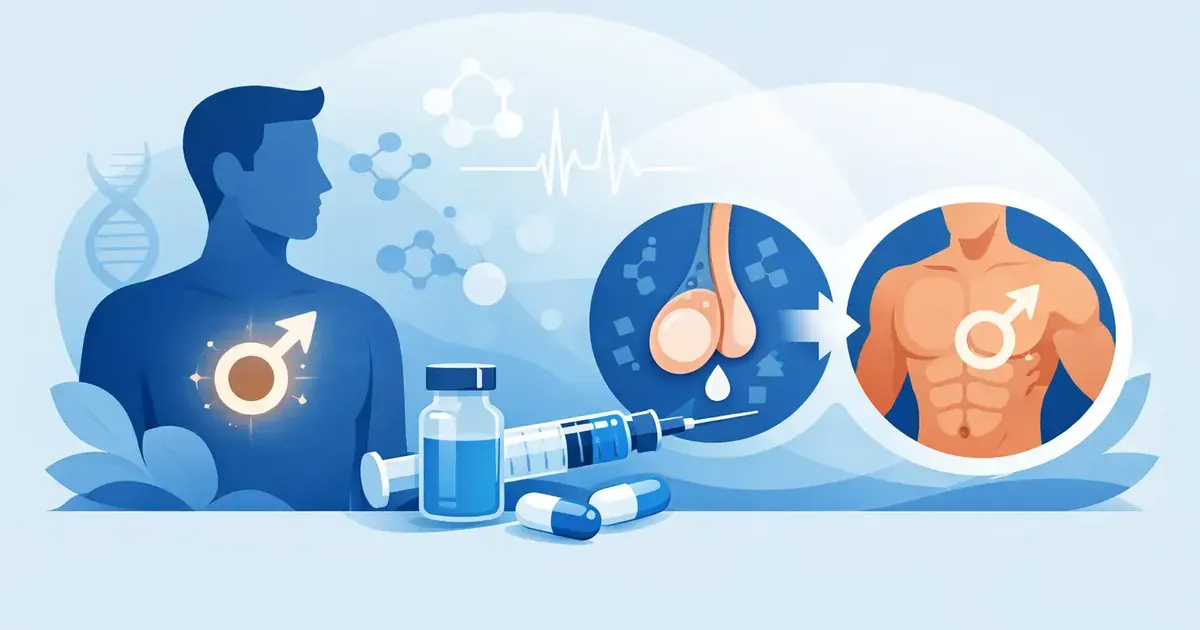
Testosterone replacement therapy works by increasing the amount of testosterone available in the body when natural production is too low to support normal function. Once levels rise into a healthier range, many people notice improvements in energy, sexual wellness, mental sharpness, body composition, and recovery.
But there is an important nuance here. Traditional TRT usually introduces testosterone from an outside source, such as injections or oral medication. That can be highly effective, especially for men with clear deficiency and symptoms. At the same time, when the body receives testosterone externally, the brain may reduce its own signaling to produce more. That is one reason some patients want a more customized plan that looks beyond standard replacement alone.
For the right candidate, BIOELITE’s licensed medical team may recommend treatment that supports natural production instead of immediately replacing testosterone outright. Medications such as enclomiphene or HCG can stimulate the hormonal pathway upstream, encouraging the body to make more of its own testosterone. This approach can be especially appealing for men who want optimization with a strategy that works with the body’s natural system whenever possible.
Replacement vs stimulation: why the difference matters
People often use TRT as a catch-all term, but there are actually different ways to address low testosterone. Understanding that distinction helps set realistic expectations.
Traditional replacement means prescribed testosterone is added directly through methods such as injections or oral testosterone. This can raise levels efficiently and predictably. For many men with clinically low testosterone, it delivers meaningful results when monitored correctly.
Stimulation-based therapy aims to increase your internal production by supporting the signaling between the brain and the testes. Instead of simply supplying testosterone from the outside, it encourages your body to produce more on its own. That approach is not ideal for every patient, but it can be a strong option depending on age, lab results, symptoms, fertility goals, and how the body is currently functioning.
This is where BIOELITE’s licensed medical team’s oversight becomes essential. The best protocol depends on what is actually causing the low testosterone picture. Is it primary testicular dysfunction? Is it weak signaling from the brain? Is it stress, body composition, sleep problems, or another hormone issue adding to the problem? Premium care starts with getting specific answers instead of guessing.
What happens after treatment starts
Most patients do not wake up the next day feeling completely different. Hormone therapy is usually a process, not an instant switch. Some effects, such as libido, energy, and sense of well-being, may improve within weeks. Other changes, like body composition, strength, and consistent performance, often take longer and depend heavily on sleep, nutrition, activity level, and overall health.
As treatment begins to work, testosterone binds to receptors throughout the body and influences multiple systems. Muscle protein synthesis can improve. Recovery may feel easier. Mood and motivation may rise. Sexual interest and erectile quality may improve, especially if low testosterone was part of the problem. Some men also notice better mental clarity and less of the flat, drained feeling that often comes with hormone decline.
That said, more is not always better. Overshooting healthy levels can create unwanted effects and does not guarantee better outcomes. Smart treatment is about optimization, not excess.
How doctors decide what protocol makes sense
A quality hormone program starts with symptoms, lab work, medical history, and goals. Symptoms matter because treatment should solve real-life problems, not just chase a lab number. Lab work matters because testosterone does not act alone. Estradiol, blood counts, thyroid markers, metabolic health, and other variables can influence both symptoms and treatment response.
If testosterone is low and symptoms line up, a licensed physician can determine whether direct replacement, natural stimulation, or a combined strategy makes the most sense. A younger man concerned about preserving fertility may need a different path than an older man with longstanding hypogonadism. Someone focused on energy and body composition may need a more comprehensive wellness plan that also addresses weight, sleep, and recovery.
That is why personalized care consistently beats generic supplement advice. Real treatment is measured, monitored, and adjusted over time.
The forms of therapy and how they differ
Injections are one of the most common testosterone delivery methods because they can be effective and dependable. Oral testosterone is another physician-guided option for some patients. Each method has trade-offs involving convenience, dosing stability, cost, and personal preference.
Then there are therapies that support natural production, including enclomiphene and HCG. These are not interchangeable with testosterone itself, and they do not fit every case. But for the right patient, they can offer a strategic alternative that aligns with the goal of stimulating the body’s own hormone production.
There is no single best format for everyone. The best option is the one that matches your labs, your symptoms, your response, and your lifestyle. A plan that works well on paper but is hard to maintain in real life is not really a good plan.
Safety, monitoring, and realistic expectations
When people ask how testosterone replacement therapy works, they often also want to know if it is safe. The honest answer is that it depends on the quality of evaluation, prescribing, and follow-up. Hormone therapy should be medically supervised with appropriate lab testing and ongoing review.
Monitoring helps BIOELITE’s licensed medical team track whether testosterone is reaching the intended range and whether other markers are changing along with it. For example, blood counts, estradiol, symptoms, blood pressure, and sexual wellness all deserve attention during treatment. This is one reason concierge-style care can make such a difference. Fast access, consistent communication, and clear adjustments lead to a better patient experience and often better outcomes.
It is also important to keep expectations grounded. Testosterone can improve a lot, but it is not a substitute for sleep, training, stress control, or nutrition. The strongest results usually come when hormone treatment is part of a bigger performance and wellness strategy.
Why personalized hormone care gets better results
The most effective testosterone care is not about putting everyone on the same protocol. It is about precision. The right plan considers whether your body needs replacement, stimulation, or broader hormone and metabolic support.
That is where a high-touch model stands out. With BIOELITE’s licensed medical team prescribed treatment, blood testing, licensed pharmacy fulfillment, and direct support, patients can move forward with more confidence and less friction. BIOELITE is built around that kind of attentive care - personalized protocols, transparent pricing, and treatment designed around real-life goals like stronger energy, better libido, improved body composition, and better performance.
If you have symptoms of low testosterone, the best next step is not guessing. It is getting a clear medical picture of what your hormones are doing and what type of support your body actually needs. The right protocol should help you feel more like yourself again, only sharper, stronger, and more in control.
Ready to talk with a provider? New patients can book at our online booking page, and existing clients can use our existing-client booking page.
Browse more in our Hormone Health Articles & Guides or see all health guides.
Frequently asked questions about how testosterone replacement therapy works
What does testosterone do in the body?
Testosterone is a core hormone involved in muscle mass, red blood cell production, libido, mood, motivation, bone density, and overall metabolic function. In men, it is primarily produced in the testes under signals from the brain.
What is the difference between replacement and stimulation?
People often use TRT as a catch-all term, but there are different ways to address low testosterone. Understanding that difference helps set realistic expectations.
What happens after treatment starts?
Most patients do not wake up the next day feeling completely different. Hormone therapy is usually a process, not an instant switch.
How do doctors decide what protocol makes sense?
A quality hormone program starts with symptoms, lab work, medical history, and goals. Symptoms matter because treatment should address real-life problems, not just chase a lab number.
Still deciding whether it fits your situation? Read Is TRT Right for You? Benefits and Risks.
Disclaimer: This article is for educational and informational purposes only and is not medical advice. It is not intended to diagnose, treat, cure, or prevent any disease or medical condition, and it does not create a provider-patient relationship. Treatment decisions should be made only after consultation with a licensed healthcare provider who can review your medical history, symptoms, medications, and lab results. Treatment options may not be appropriate for everyone and may vary based on clinical eligibility, state laws, provider licensure, and pharmacy availability. Results vary and are not guaranteed. If you are experiencing a medical emergency, call 911 or seek emergency medical care.