
Hormone Health & Wellness
Medical Facility in Boynton Beach Florida
TESTOSTERONE CREAM + ENCLOMIPHENE
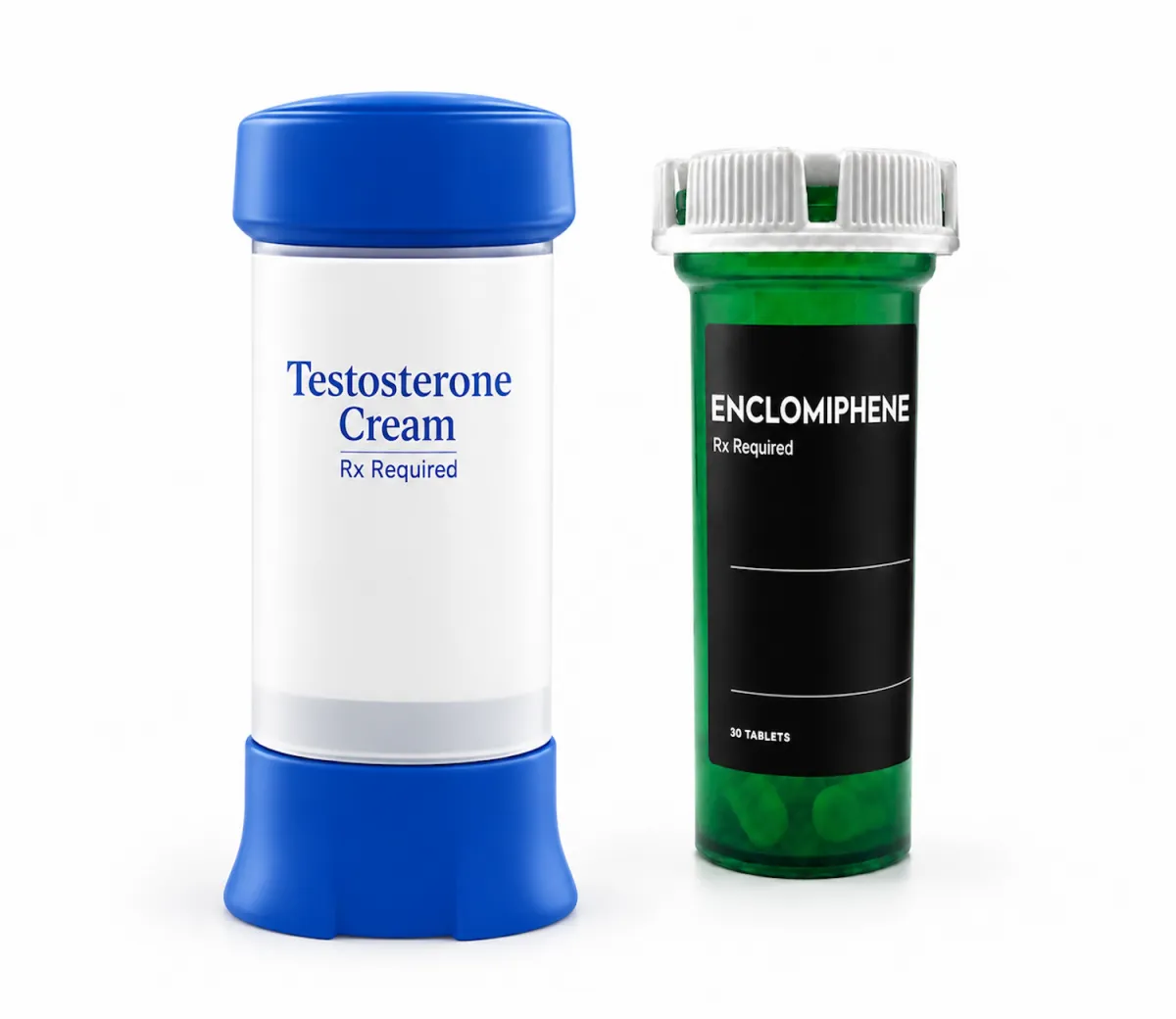
Increase Testosterone While Maintaining the Body's Natural Production of Testosterone.
Testosterone cream is a topical medication applied to the skin that delivers testosterone directly into the bloodstream, raising circulating testosterone levels in men with clinically low levels.
Enclomiphene is a selective estrogen receptor modulator (SERM) that works by blocking estrogen receptors in the hypothalamus and pituitary gland, signaling the body's production of tesosterone.
MONTHLY PRICING
SPECIAL from $319/month
Testosterone Cream and Enclomiphene: How the Combination Approach Works
Men exploring treatment for low testosterone often ask the same question early on: if I start therapy, will my body ever make its own testosterone again? It's a fair concern. Standard testosterone replacement therapy (TRT) is effective at raising testosterone levels, but it also sends a signal to the brain to slow down natural production. Some hormone optimization clinics now pair topical testosterone with enclomiphene, a medication intended to help keep the body's own hormone-signaling pathway active during treatment. Here's how each piece works — and what to weigh before considering it.
What Low Testosterone Looks Like
Testosterone naturally declines with age, and for some men it drops enough to cause fatigue, reduced muscle mass, low libido, mood changes, and difficulty concentrating. A diagnosis of low testosterone (hypogonadism) is based on bloodwork — typically a morning total testosterone level — together with a review of symptoms, not on symptoms alone.
What Testosterone Cream Does
Topical testosterone cream is applied to the skin and absorbed into the bloodstream, raising circulating testosterone levels directly. Because it bypasses the digestive system, it avoids some of the liver-related concerns associated with oral testosterone products. Dosing is individualized and adjusted based on follow-up labs, since absorption and response vary from person to person.
Why Testosterone Therapy Alone Can Suppress Natural Production
The body regulates testosterone through a feedback loop involving the hypothalamus, pituitary gland, and testes (often called the HPG axis). When testosterone is supplied from an outside source — whether by cream, injection, or gel — the brain senses that levels are adequate and reduces its own signaling (LH and FSH) to the testes. Over time, this can lower natural testosterone production, shrink testicular volume, and reduce sperm production. This is a well-documented effect of testosterone monotherapy, not a rare side effect, and it's the reason some men on TRT are advised to consider an adjunct therapy if preserving testicular function or fertility matters to them.
Where Enclomiphene Fits In
Enclomiphene is a selective estrogen receptor modulator (SERM). Rather than supplying testosterone, it works upstream: it blocks estrogen receptors in the hypothalamus and pituitary, which reduces the negative feedback that would otherwise slow hormone signaling. This can increase the release of GnRH, LH, and FSH — the same signals that drive the testes to produce testosterone naturally. Because of this mechanism, enclomiphene is sometimes prescribed on its own as an alternative to TRT for men who want to raise testosterone while keeping natural testicular function and fertility more intact.
The Combination Rationale
Pairing testosterone cream with enclomiphene is intended to get the benefit of both approaches: the cream provides a more direct and predictable rise in serum testosterone, while the enclomiphene is meant to keep LH and FSH signaling active, helping to offset — rather than fully prevent — the suppressive effect that exogenous testosterone would otherwise have on natural production and testicular size. It's a similar rationale to why some TRT protocols pair testosterone with hCG. It's worth being clear-eyed about the evidence here: the individual mechanisms are well studied, but formal clinical trial data on this specific combination (topical testosterone plus enclomiphene) is still limited. Clinics that use it typically describe it as a reasonable, mechanism-based strategy rather than a guaranteed outcome, and responses vary by individual.
Who Might Be a Candidate
This approach isn't a fit for everyone. A candidate evaluation typically includes baseline labs (total and free testosterone, LH, FSH, estradiol, hematocrit, and PSA where age-appropriate), a symptom history, and a discussion of goals — including whether preserving fertility or testicular size is a priority. Ongoing lab monitoring is used to adjust dosing over time.
Safety and Regulatory Information:
*This is prescription therapy. Both testosterone and enclomiphene should only be used under the supervision of a licensed healthcare provider, with baseline and follow-up lab monitoring.
*Enclomiphene's regulatory status. Enclomiphene is not currently FDA-approved for any indication. It's available only by prescription through licensed compounding pharmacies, and prescribing it reflects a provider's individualized clinical judgment rather than an FDA-approved labeling. Patients should understand this distinction before starting treatment.
*Possible side effects of testosterone therapy can include acne or oily skin, fluid retention, mood or sleep changes, elevated red blood cell count (which requires periodic monitoring), potential worsening of sleep apnea, and effects on prostate health and fertility that should be discussed individually with a provider. Topical formulations can also cause skin irritation at the application site and carry a risk of transference to others through skin contact.
*Possible side effects of enclomiphene can include headache, nausea, dizziness, hot flashes, and, less commonly, visual disturbances.
*Individual results vary. This combination will not produce the same outcome for every patient, and it does not guarantee that natural testosterone production or fertility will be fully preserved.
This article is for general educational purposes and is not medical advice. It isn't a substitute for an individualized evaluation by a licensed healthcare provider.
Getting Started
If low testosterone symptoms are affecting your day-to-day life, the first step is lab-confirmed diagnosis and a conversation with a licensed provider about which options — testosterone therapy alone, enclomiphene alone, or a combination approach — best match your health history and goals.


BIOELITE Hormone Health and Wellness
Copyright 2024 BIOELITE Hormone Health and Wellness. The information presented on this website is not intended to take the place of your personal physician’s advice and is not intended to diagnose, treat, cure or prevent any disease. Discuss this information with your own physician or healthcare provider to determine what is right for you. All information is intended for your general knowledge only and is not a substitute for medical advice or treatment for specific medical conditions. The information contained herein is presented in summary form only and intended to provide broad consumer understanding and knowledge. The information should not be considered complete and should not be used in place of a visit, call, consultation or advice of your physician or other health care provider.